
ROOTS
PAST. PRESENT. FUTURE.
Black golfers have been present in British golf for 100 years not always visible in the mainstream narrative, but always there, competing, winning, coaching, and shaping the game at every level.
This timeline traces that continuous presence from the 1880s through to today's DP World Tour and Ladies European Tour professionals, honoring the pioneers who broke barriers and the communities that kept the door open when the game itself was slow to recognise them.

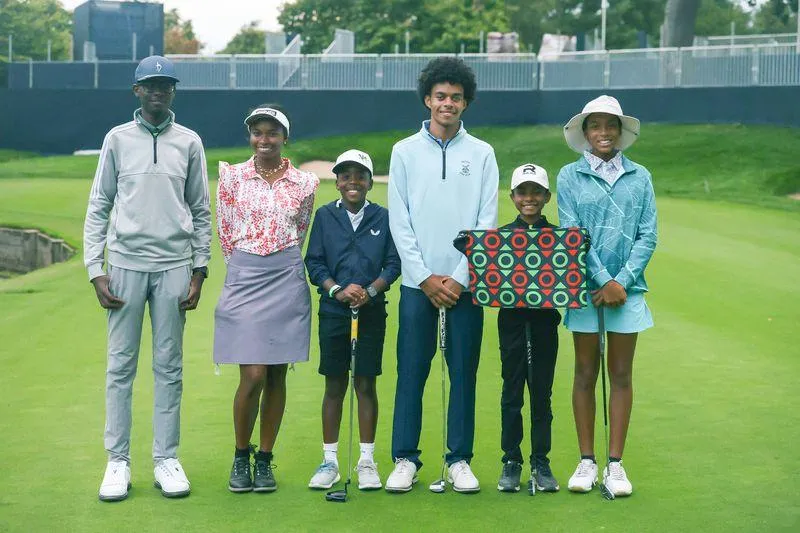
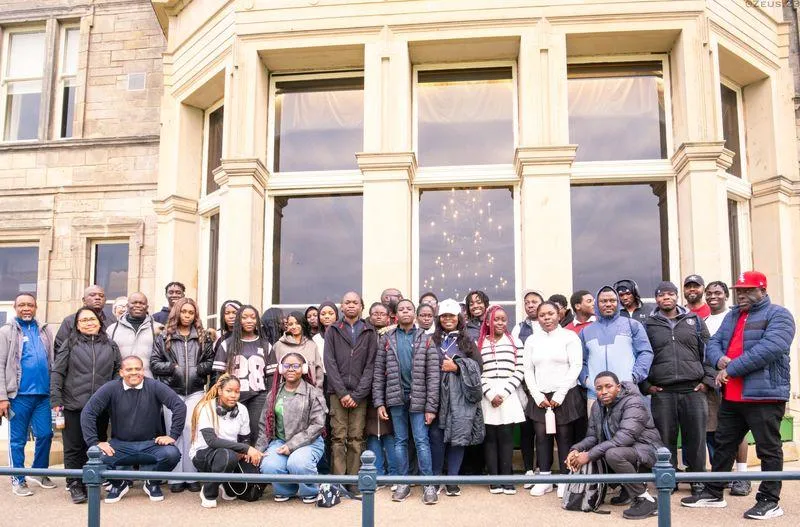
Golf, Race & Representation
Long before modern conversations about diversity, Black players were already on British fairways often welcomed locally, but rarely recognized in the wider story of the game.
Global desegregation in professional golf moved slowly. The PGA of America did not remove its "Caucasian only" clause until 1961; Pete Brown won the first PGA-sanctioned event in 1964; Lee Elder became the first Black golfer to play The Masters in 1975; and Tiger Woods' 1997 Masters victory globally reshaped perceptions of who belonged in the game.
In the UK, however, Black golfers had already built their own paths through local community, club golf and universities, often excelling even when championship opportunities were limited. This timeline traces that continuous, sometimes unseen, presence and celebrates the figures whose contributions have finally begun to receive wider recognition.
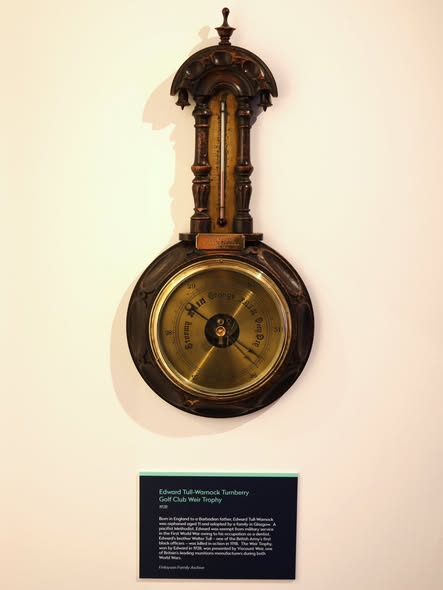
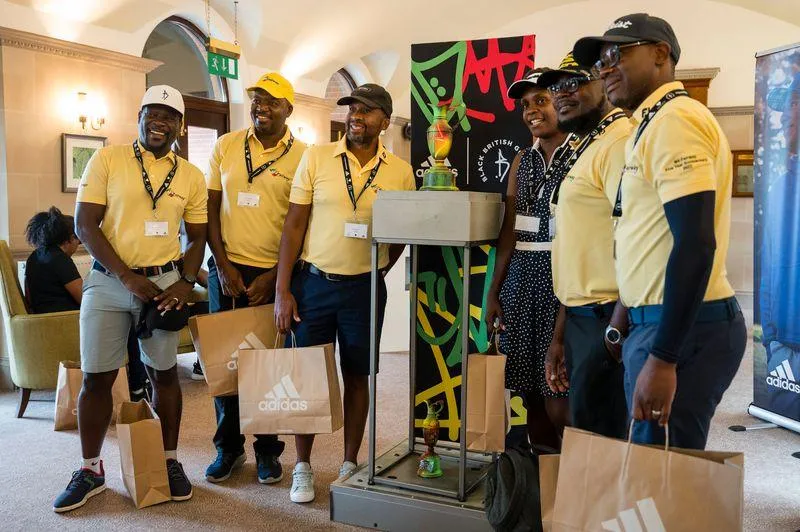
The Edward Tull‑Warnock trophies connected to his victories are now being conserved and displayed at the R&A World Golf Museum through Black British Golfers’ ongoing efforts to research, protect and share this 100‑plus‑year heritage.
The Edward Tull‑Warnock trophies connected to his victories are now being conserved and displayed at the R&A World Golf Museum through Black British Golfers’ ongoing efforts to research, protect and share this 100‑plus‑year heritage.
THE STORY OF EDWARD TULL-WARNOCK
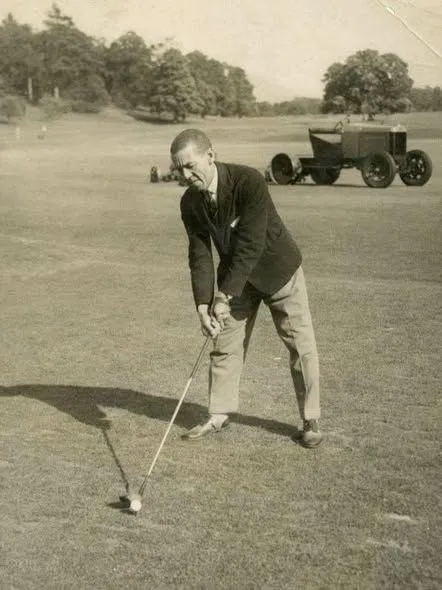
The Finlayson Family Archive
Edward Tull‑Warnock was born in Folkestone, Kent in 1886, the son of Daniel Tull, whose parents had been enslaved on the Clifton Hall plantation in Barbados, and Alice Elizabeth Palmer from Kent. Orphaned by the age of 11 in a Britain without a welfare state, Edward and his younger brother Walter Tull were placed in Dr Stephenson’s Children’s Home in Bethnal Green, where Edward sang in the touring choir that helped raise funds and where both brothers’ talents first drew public notice.
GOLF IN SCOTLAND
From the 1920s Edward Tull Warnock was a committed member of Turnberry Golf Club, playing his golf on one of Scotland’s most prestigious championship links. Competing in both club and dentists’ competitions, he won multiple trophies, including the Weir Trophy in 1928 and Western Dental Golf Club titles such as the Nasmyth Cup between 1928 and 1930, giving more than 100 years of documented Black presence and success on championship courses.
These victories came in an era when most British golf clubs operated informal colour and class barriers, making Edward’s achievements at Turnberry and within the Western Dental Golf Club a powerful early example of a Black golfer thriving at the heart of elite golf culture.
FAMILY, FOOTBALL AND PROFESSIONAL LIFE
Sport ran through the family story. Walter became a trailblazing professional footballer, playing as an inside‑forward for Clapton, then for Tottenham Hotspur in the First Division-where he was among the first Black outfield players in English league football-before moving to Northampton Town. Edward himself played serious football for Ayr Parkhouse and Girvan Athletic before focusing his competitive energies on golf.
In dentistry Edward championed preventative care-good diet, hygiene and regular examinations-and these principles underpinned his strong support for the creation of the National Health Service (NHS), which he welcomed in 1948 as a guarantee that people would receive treatment when they needed it, not when they could afford it.
DRIVING CHANGE IN THE FACE OF ADVERSITY
He once sent a photograph with a job application in England to make clear that he was “not European in appearance,” yet when he arrived, he was met with “Good God, you’re coloured!” and the offer was withdrawn immediately, forcing him to return to Glasgow the same day. Experiences like this, combined with his daily work with patients from deprived communities, deepened his commitment to social justice and equal access to care.
Family and contemporaries remembered him as a man of integrity and faith who combined professional excellence with deep care for others until his death in December 1950, aged 64, and today our golfing community continues to honour his legacy as a landmark figure in more than a century of Black British golf heritage.
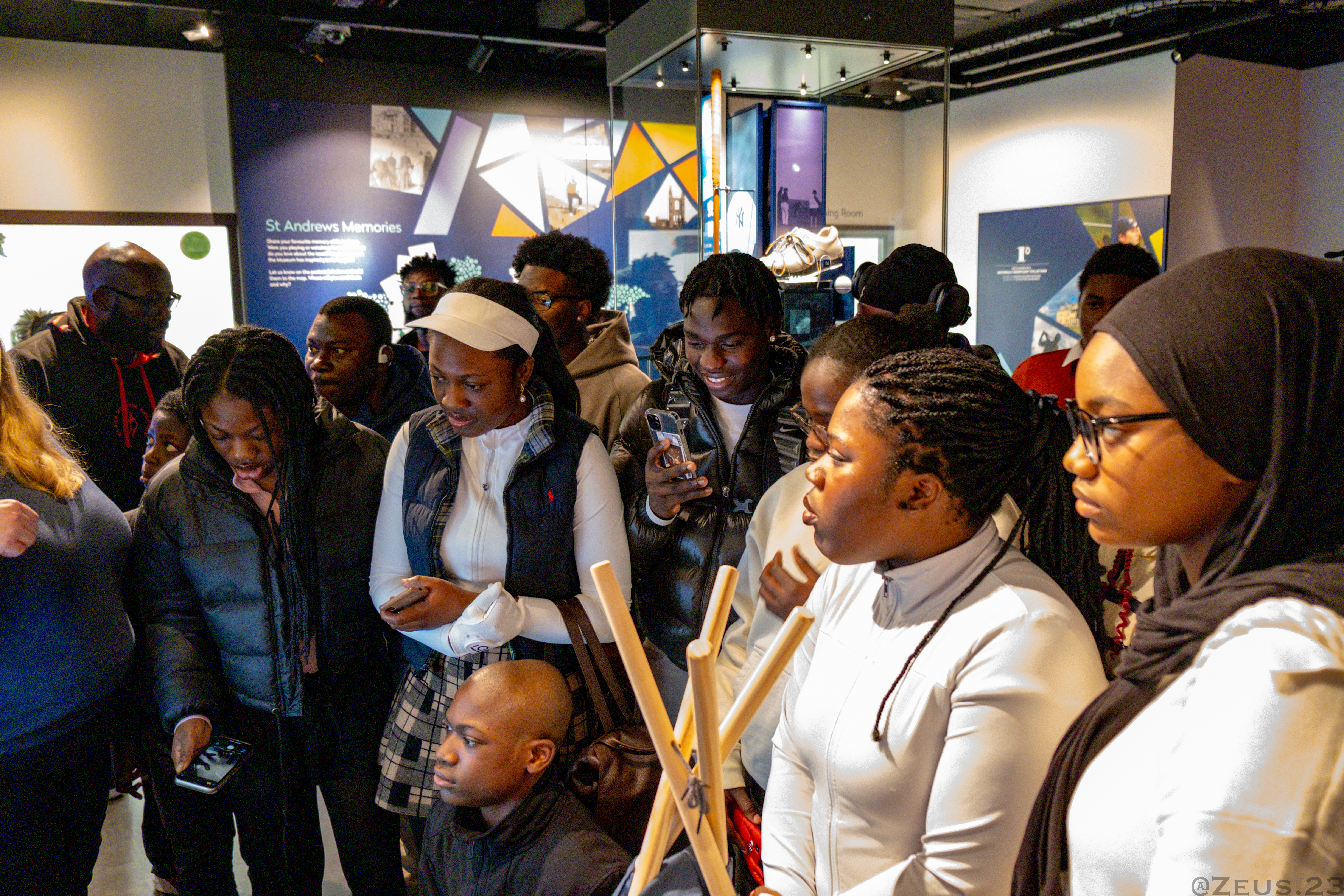
The Edward Tull‑Warnock trophies connected to his victories are now being conserved and displayed at the R&A World Golf Museum through Black British Golfers’ ongoing efforts to research, protect and share this 100‑plus‑year heritage.
THE FIRST BLACK PGA PROFESSIONAL
1960s-1970s
JIM HOWARD
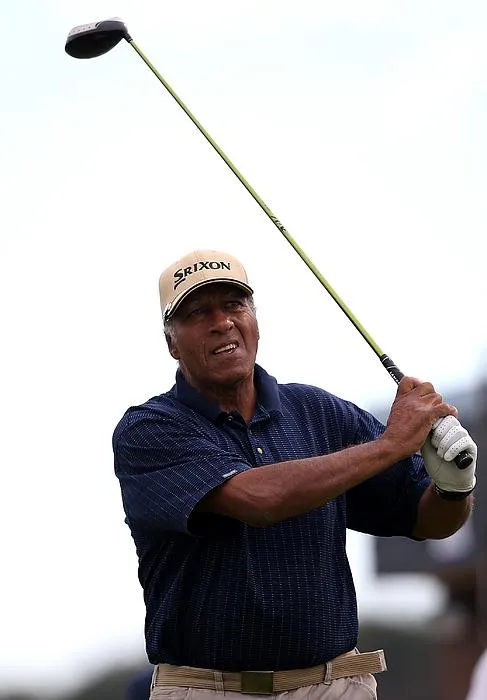
Jim Howard emerged in the 1960s as one of the first Black golfers to qualify as a PGA professional, building a long career that included more than 30 years as head professional at Pontypool Golf Club in Wales.
While often remembered through the "Phantom of the Open" story, he was a skilled pro in his own right, quietly pushing for opportunity and respect within a game that rarely highlighted Black voices.
His day in the global golf spotlight came at the 1976 Open Championship qualifier at Formby, where he played alongside Maurice Flitcroft in the now-famous qualifying round that produced one of the highest scores in Open qualifying history.
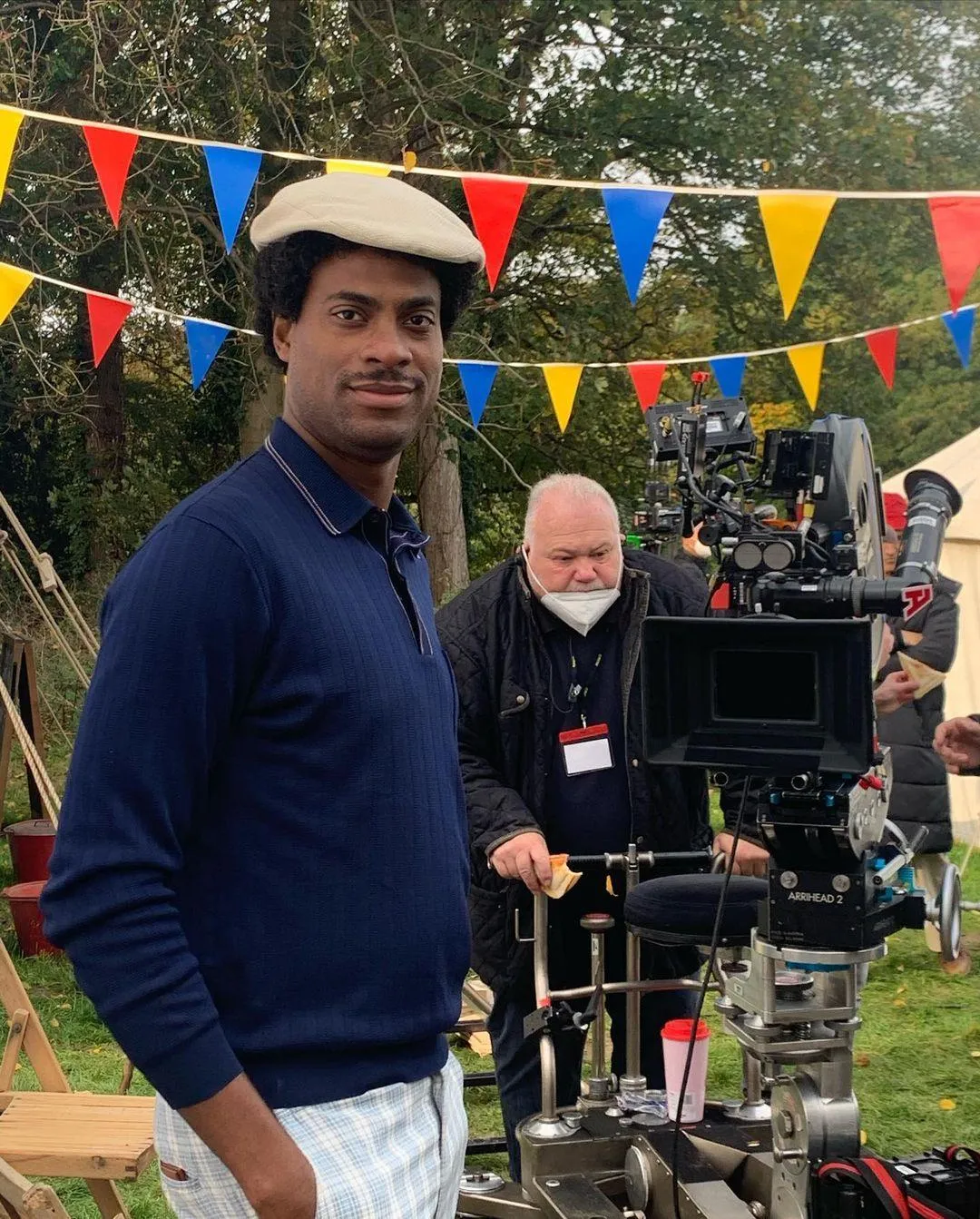
That extraordinary day later inspired the feature film The Phantom of the Open (2021), in which Howard appears as a character portrayed on screen by actor Ebenezer Eben‑Spiff. Even more telling is what happened off screen: on his retirement, Howard received a letter from Tiger Woods thanking him, on behalf of Black golfers like himself, for helping make it possible to pursue golf as a profession-an acknowledgement that places a Black British club professional inside the global story of the modern game.
DAVID PHIRI

David Abel Ray Phiri (1937–2012) was born in what is now Zambia and came to the UK on scholarship, studying social sciences at the University of Bristol before reading Social Anthropology at Oxford University.
He took up golf at Bristol and progressed so quickly that, within two years, he was captain of the university golf team-a remarkable achievement that signaled both talent and leadership on and off the course.
At Oxford, his handicap dropped to three and he became a varsity golfer of considerable skill. He played for the Divots (the second team) against Cambridge in 1961, winning both his matches. He then played for the full Oxford university side in the 1962 and 1963 varsity matches, again winning both his matches in both years.
In 1962, he became the first African ever to be awarded an Oxford golf Blue-a landmark honor that reflected not only his golfing ability but his standing within the university. He was later elected a member of the Royal & Ancient Golf Club at St Andrews, another historic first for a Black African.
The famous photograph of Phiri playing at Southfield Golf Course, Oxford in 1962 captures him at this breakthrough moment-an African student excelling academically and athletically in spaces that had rarely seen Black golfers before.
Phiri's later career took him to the heights of his native country's financial and sporting life. He served as Governor of the Central Bank of Zambia and as a leading sports administrator, showing how golf for him was not just a pastime but part of a wider pattern of breaking barriers and leading change.
THE FIRST BLACK TOUR PROFESSIONAL
1970s-1990s
Roland "Roly" West
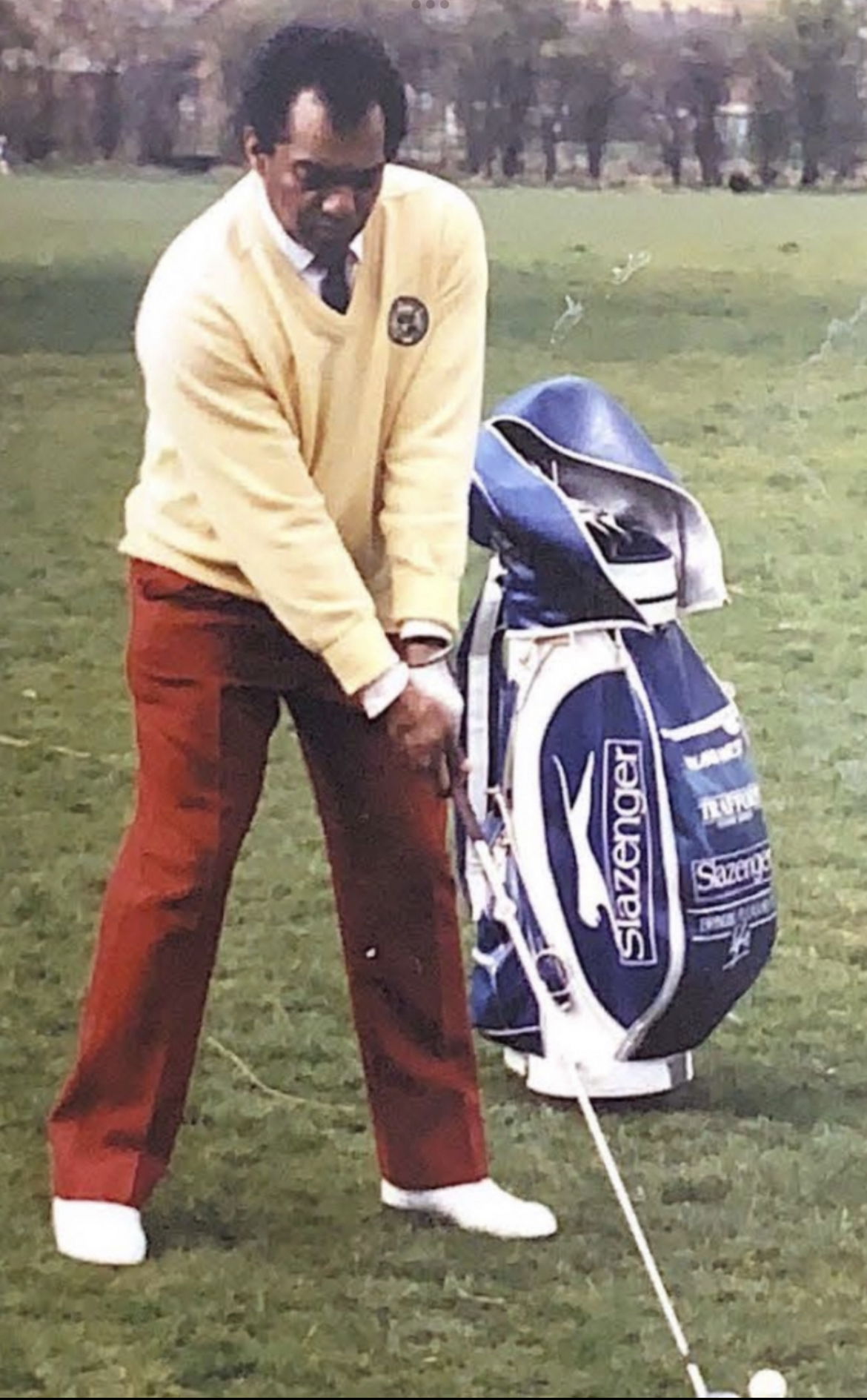
Roland "Roly" West
Roland "Roly" West is widely recognised as Britain's first Black golf professional, a pillar of club golf in the North‑West and a figure whose legacy continues to shape the game through community pathways.
Born in La Brea, Trinidad in 1931, Roly moved to the UK as a child and first made his name as a talented cricketer. However, he grew tired of cricket matches being constantly cancelled due to the typical British weather, and a friend suggested he take up golf.
When he started playing, his first handicap was ten, then six, and then four. His improvement was rapid and exceptional. Under the guidance and encouragement of legendary golf professional Hugh Lewis-who later went on to become the first professional at The Belfry-Roly quickly gained his Cheshire status and was invited to play in all the leading amateur tournaments, making history by winning his county colours in just 12 months.
In 1971, a landmark year, he won all his tournaments and defeated the world-famous Mr Lu of Ryder Cup and British Open fame in a tournament at The Mere Golf Club, underlining that a Black British professional could compete with-and beat-some of the best in the world.
A member of Altrincham Golf Club from 1964, Roly served as Club Professional from 1971 to 1991, coaching and mentoring generations of golfers before eventually moving to Norway.
His legacy now continues through his son James West and the club's community work, underlining how a pioneering Black professional helped root the game in local life as well as in elite competition.
EMERGENCE OF SOCIETY GOLF
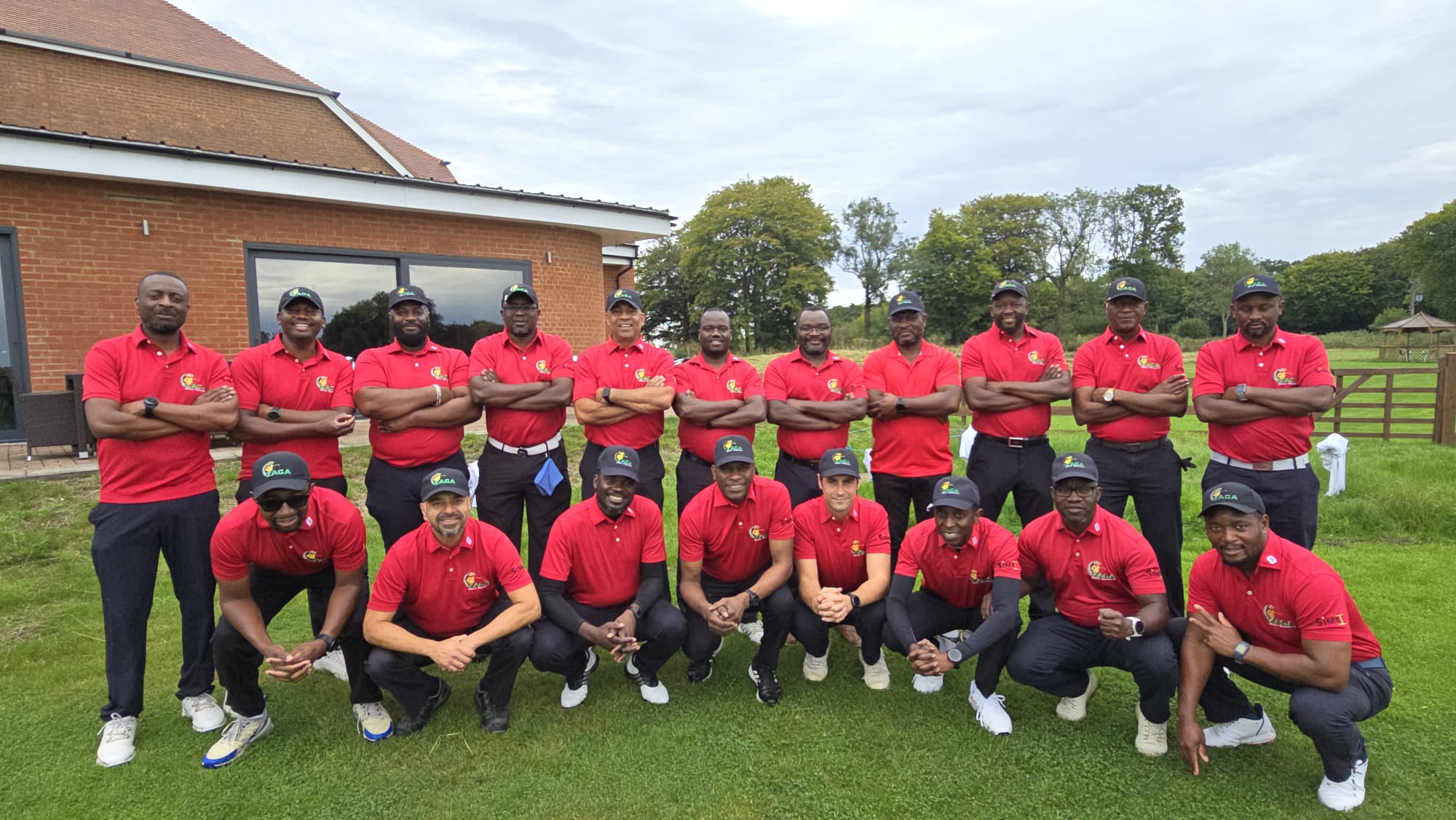
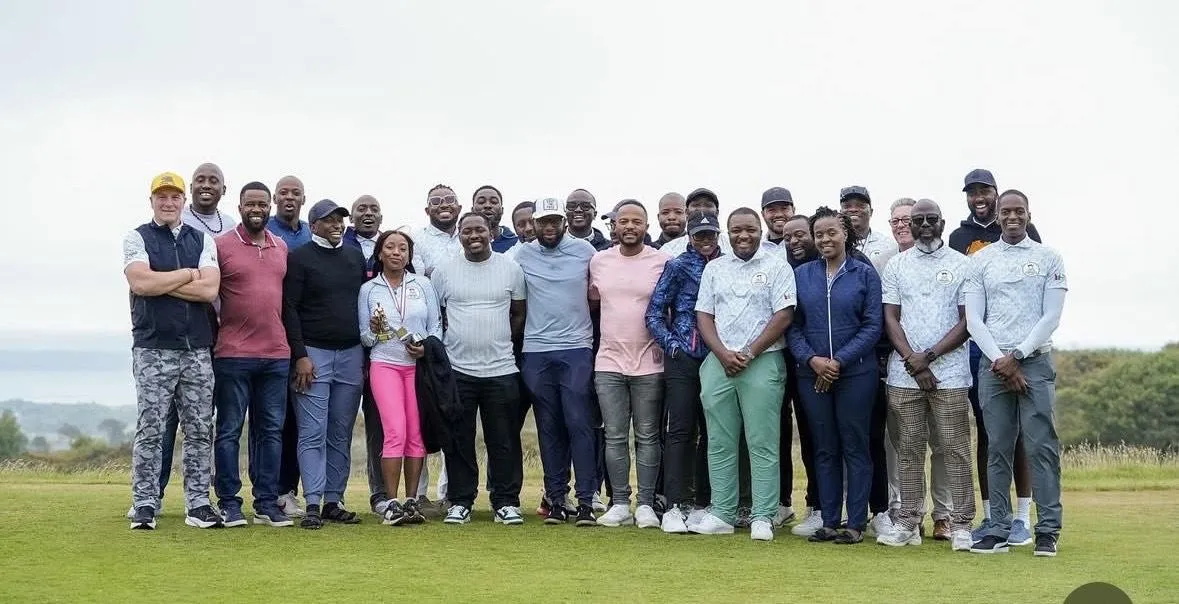
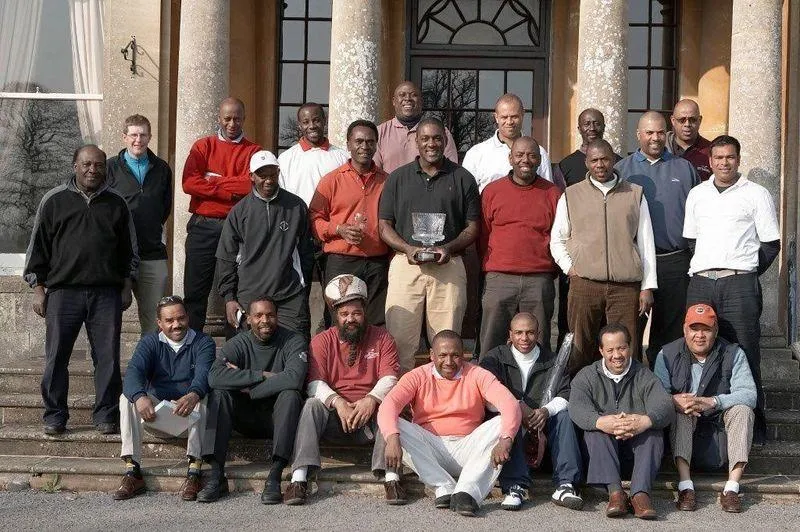
In the 1990s, the emergence of Black‑led golf societies such as the African Caribbean Golf Association (ACGA, founded 1993) created organised spaces where Black golfers could compete, socialise and feel fully included in the game.
That pioneering model has grown into a vibrant network of societies across the UK, giving new and experienced golfers regualar events and a ready‑made community.
Current Black British‑led golf societies include:
African Caribbean Golf Association (ACGA)
Caribbean Golf Society (CGS)
Comrades Golf Society
Different Strokes
Hackers and Guzzlers
M4 Fairways
Savannah Golf Society
Nigeria UK Golf Association (NUGA)
Titans Golf Society
Ubuntu Scotland
Zambezi Golf Society (ZGS)
Zimbabwe Amateur Golf Association (ZAGA)
ERA OF COMPETING TOUR PROS
1999-2019
Zane Scotland
Zane Scotland stands as the youngest English golfer to qualify for The Open Championship at age 16 in 1999, a record that remains extraordinary.
A multiple winner on the EuroPro Tour and MENA Tour, Scotland is also a Callaway ambassador and, most significantly, has been appointed R&A Diversity Ambassador-a role that places him at the centre of golf governance conversations around inclusion and representation.
Henni Zuel
Henni Zuel became the youngest ever amateur to join the Ladies European Tour, later winning major amateur events such as the Girls’ Amateur Championship and playing for Europe in the 2007 Junior Solheim Cup before turning professional in 2008.
Injuries eventually pushed her towards broadcasting, where she has established herself with Sky Sports, GolfTV and LIV GOLF as one of the most recognizable voices in global golf and a leading woman in the sport’s media coverage.
THE MODERN ERA
2020 Onwards
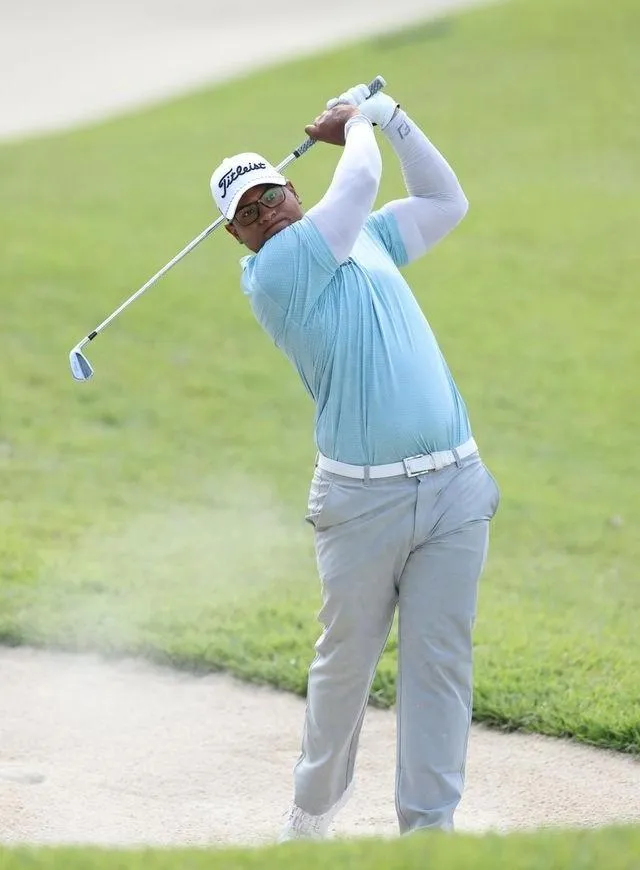
Robin "Tiger" Williams: DP World Tour
Robin "Tiger" Williams is a South African-born British golfer who plays out of Peterborough Milton Golf Club and competes on the DP World Tour.
A former leading European junior and Junior Ryder Cup player, he is now contending in DP World Tour events and aiming to become a regular fixture and winner at that level. His aggressive, entertaining style marks a new generation of Black golfers bringing fresh energy to professional competition.
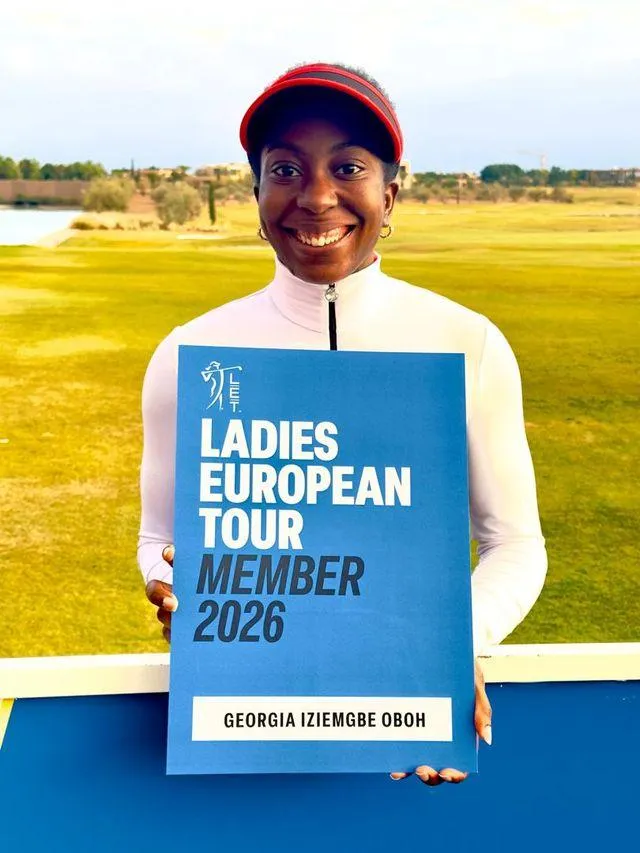
Georgia Oboh: Ladies European Tour
Georgia Oboh is a British-born Nigerian professional golfer who competes on the Ladies European Tour and related circuits. She is one of the most visible Black women in European professional golf.
Having turned professional at 17 after a decorated junior career, Georgia is open and ambitious about using her journey to inspire the next generation of female golfers to see professional golf as an achievable path. She is pursuing the world number one ranking while actively mentoring younger players coming through grassroots and amateur golf.
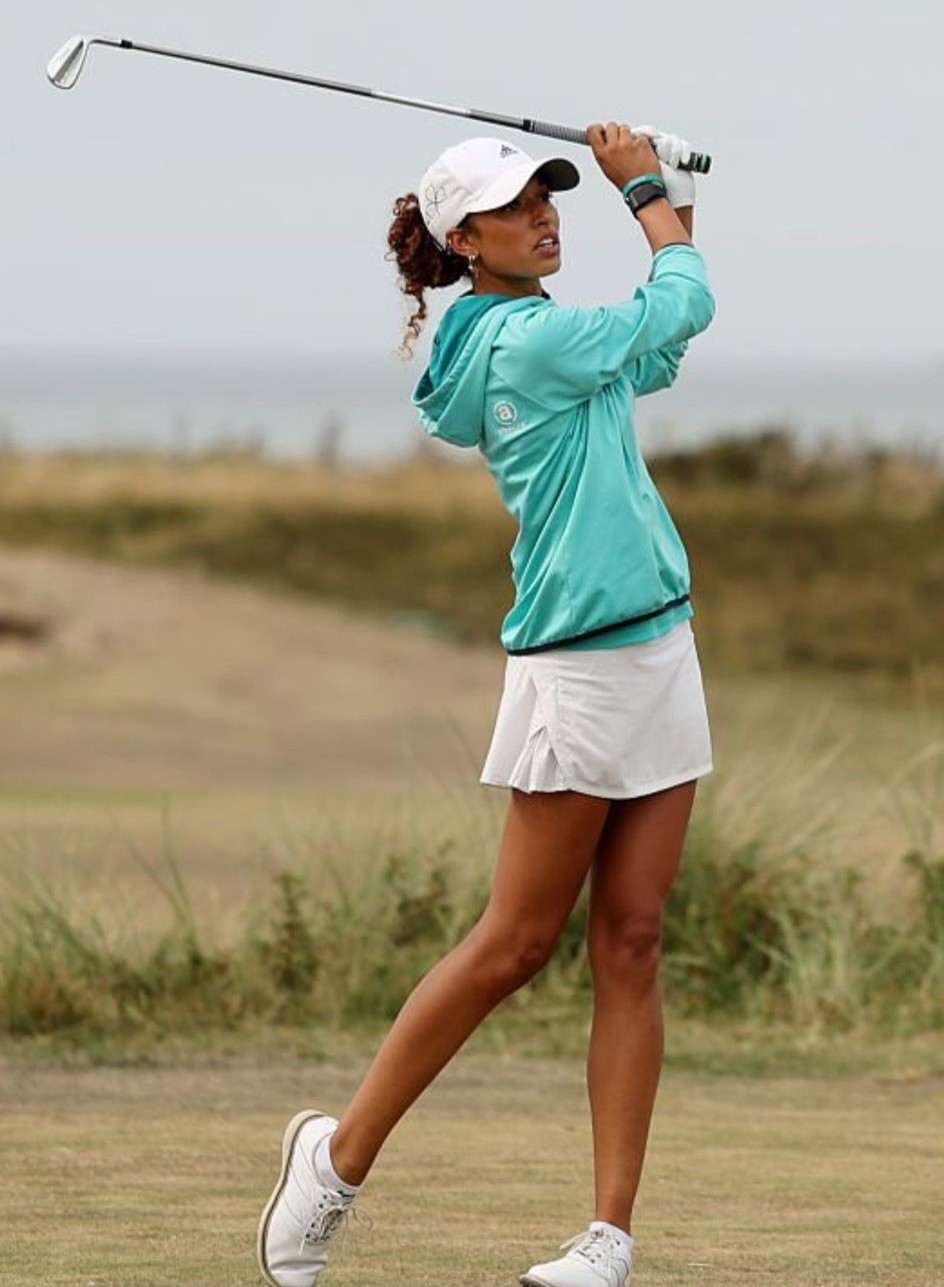
Roisin Scanlon
Roisin is an amateur golfer and one of the most exciting young talents in the women’s game.
Originally from Bedford with Jamaican roots, she represents Ireland and is based at Albany in The Bahamas, where she studies and trains.
She will join Texas Tech University on a golf scholarship in 2026. In 2025, she won the Helen Holm Scottish Women’s Open.
COMPETING, TEACHING AND MEDIA PROS
Players like brothers Leon & Ryan Fricker and Seb Sadin are competitive professionals whose progress reflects growing pathways for young Black British players in elite amateur and professional golf, with their visibility continuing to inspire newcomers.
Trey Niven
Nicola Bennett
Colton Alleyne-Davis
James Ashman
Myles Fountaine
Jerome Foster
Cosmas Mufaya
Natasha Ainsley-Thomas
Marco Cruse
Kezaia Dimosi
FOUNDING OF BLACK BRITISH GOLFERS
2021
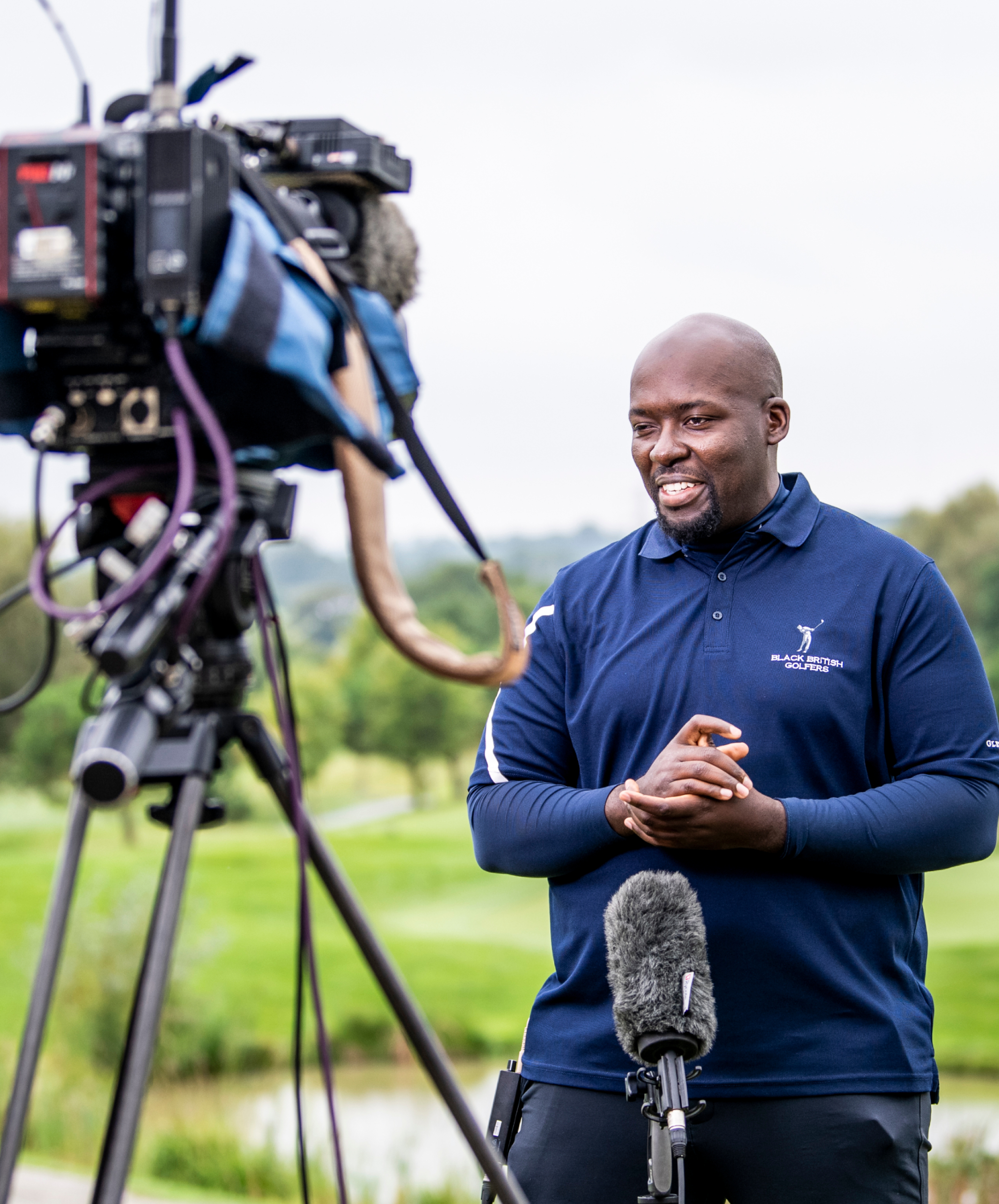
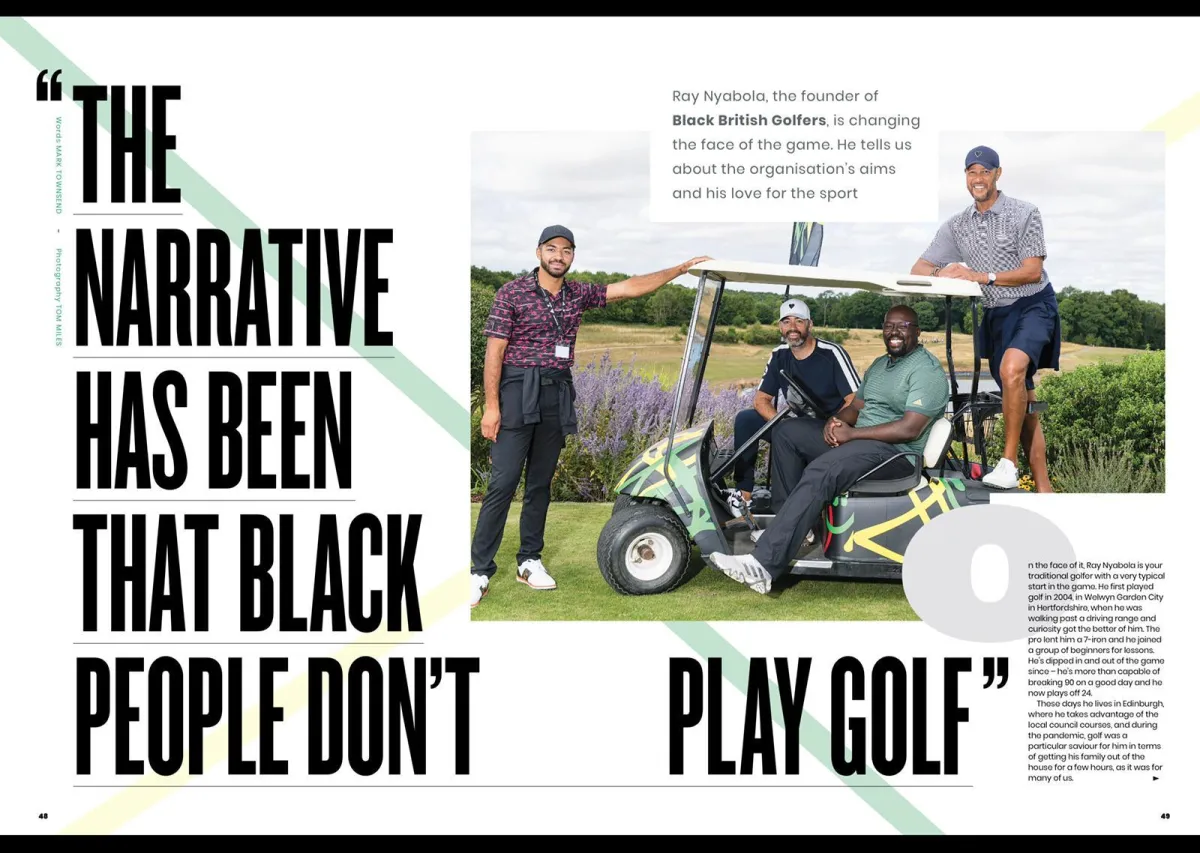
Ray Nyabola founded Black British Golfers (BBG) to connect these stories—past and present and to highlight a presence that has always been there but remained largely unseen.
Launched initially as a social media platform, BBG quickly became a hub for storytelling, community building and advocacy. The founding mission was clear: to surface the long-standing, often unrecognized Black presence in British golf and to create pathways educational, competitive and professional for future Black British talent.
Black golfers have been present in British golf for 140 years—from Edward Tull-Warnock winning the Weir Trophy at Turnberry in 1928, through David Phiri's Oxford Blue in 1962, Jim Howard's quiet professionalism in Wales, and Roland West's two decades shaping Altrincham, to Georgia Oboh and Robin "Tiger" Williams competing on today's global tours.
This is not a story of recent arrival or sudden diversity. It is a story of continuous presence, sometimes visible, often overlooked, but always significant.
Looking Forward
The future of Black British golf is being shaped by the stories we tell and the pathways we create.
We stand as the bridge between honoring that heritage and ensuring the next generation of Black British golfers sees themselves not as groundbreakers but as part of an unbroken, respected lineage in the game they love.
Join the BBG Community
Get the latest on events, academy updates, and heritage stories.
POWERED BY AURAL EXPERIENCE COMMERCE
Black British Golfers is a Community interest Company with number: 15332430


Copyright 2026. Black British Golfers. All Rights Reserved.